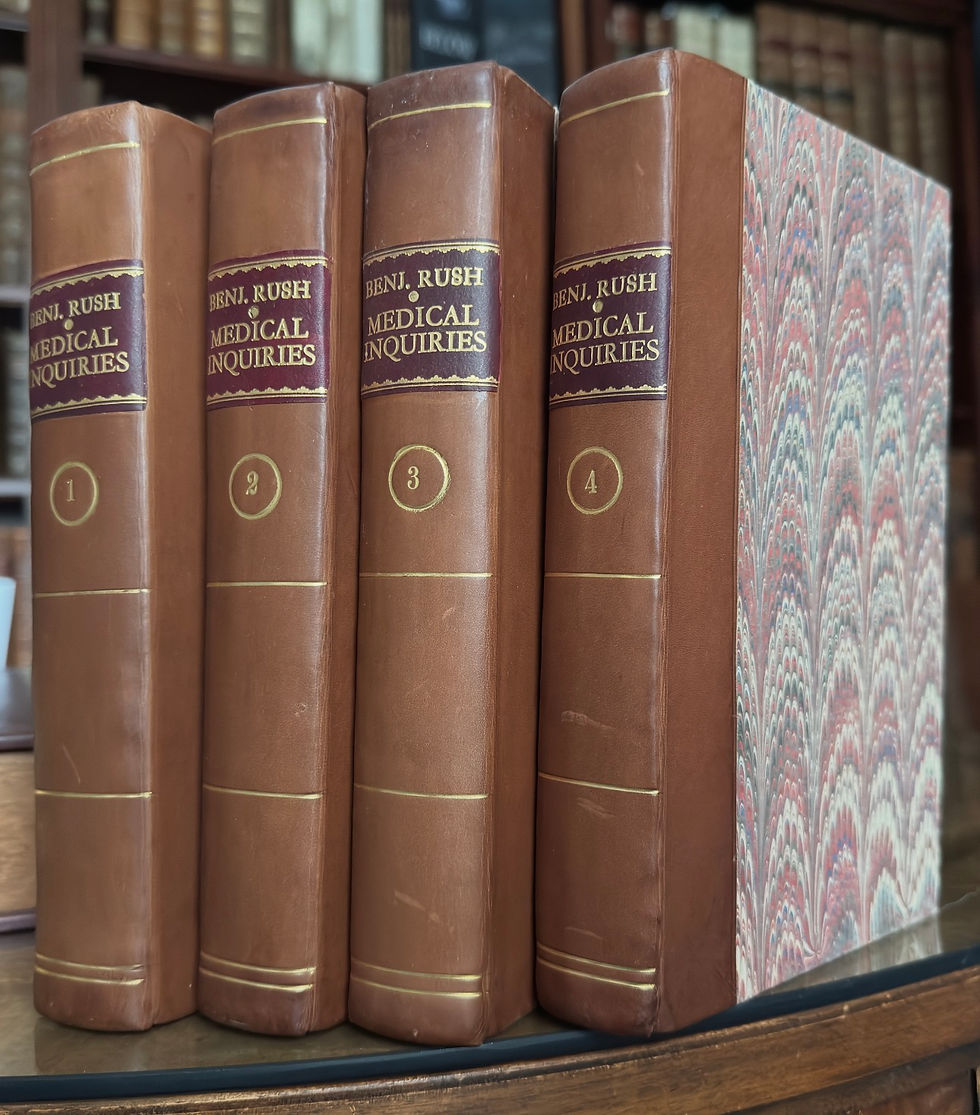
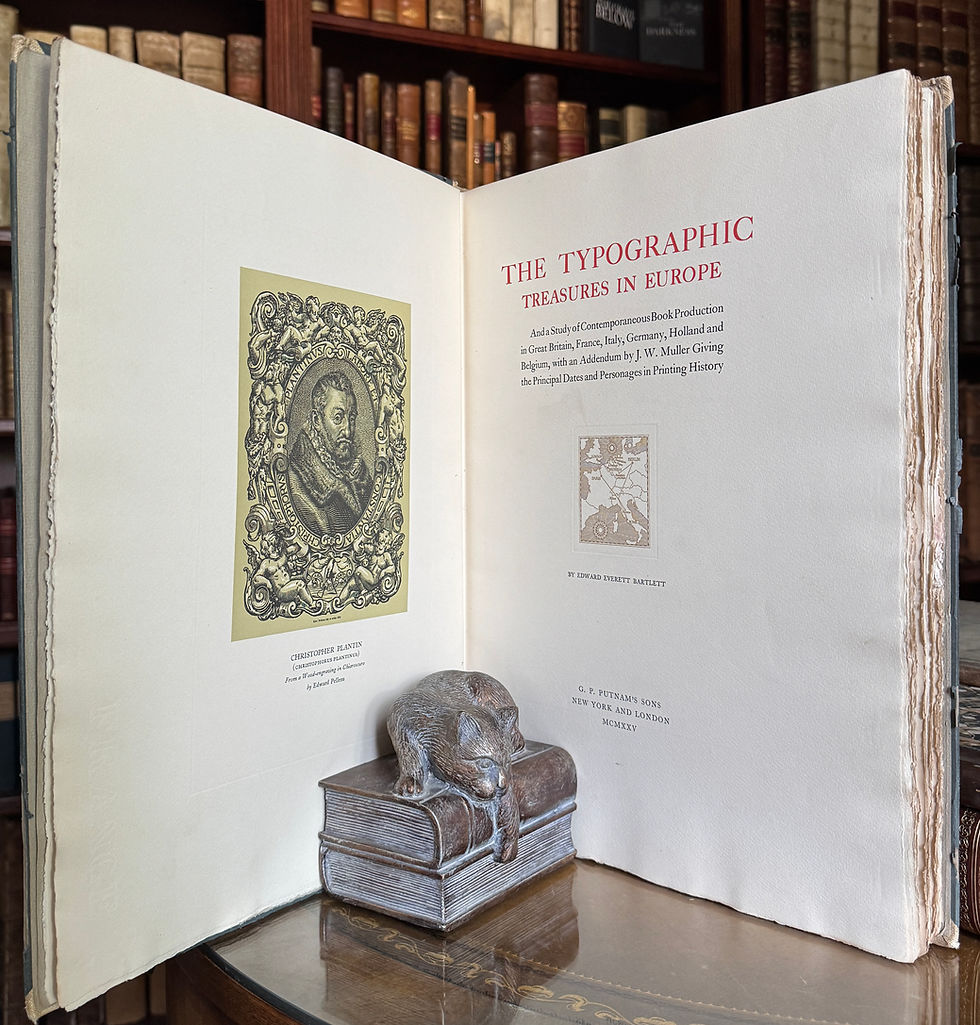
Havers, Osteologia Nova, 1692. Blumenbach's copy.
Osteologia Nova sive Novae Quaedam Observationes de Ossibus, et Partibus ad Illa Pertinentibus Quarum occasione Ossium accretio & nutritio, tum in genere, tum in specie, novum quoque glandularum mucilaginosarum, dictarum, genus nec non affectus quidem corporis humani praeternaturales, aliaque Phaenomena scitu dignissima ad causas suas revocantur & exponuntur. Quinque discursibus pagina aversa designatis Regiae Societati Londinensi per intervalla communicatae: & superiore demum anno idiomate Anglico Londini editae. Per Cloptonem Havers, Med. Doct. & Soc. Reg. Socium. Nunc vero, ut plurimorum usibus & curiositati inservirent, in Latinum idioma conversae, & editae. Cura Melchioris Friderici Geuderi, Med. Doct. & Poliatri Studtgardiani. Francofurti & Lipsiae, Apud Georgium Wilhelmum Kuhnium, Bibliop. Ulmens. 1692.
Early plain boards. Black ink writing on spine. Some wear to boards and corners bumped. Hinges reinforced. Prior owners’ inscriptions on front pastedown (Jo. Fr. Blumenbach. 1783--partially obstructed by patch of paper), and on title page (Henrici Hagenbuchii. 1722). Additional later penciled notes on front and rear paste downs. An uncut copy. Mild foxing and toning, but mostly bright. Binding tight.
Title - ):(^8, two folding plates, A-Z^8, Aa^7 (lacks final blank and rfep; textually complete).
(16) 343 (37) with two folding plates.
Heirs 695.5: Clopton Havers (1657-1702) “was an English physician who did pioneering research on the microstructures of the bone. He was the first to describe Haversian canals and Sharpey’s fibres. Osteologia nova is his only book.”
G-M 387: “Havers discovered the Haversian canals and made important observations of the physiology of bone growth and repair. The Haversian lamellae, glands, and folds, are also named after him. The Haversian canals were observed by van Leeuwenhoek in 1686.”
Johann Friedrich Blumenbach (11 May 1752 – 22 January 1840) was the founder of anthropology and craniology, Professor of Medicine at Göttingen, and the first to show the value of comparative anatomy in the study of anthropology. In his doctoral dissertation, he classified mankind into four races, based on selected combinations of head shape, skin color and hair form. In the second edition he expanded it to five races, but his famous terms “Caucasian, Mongolian, Ethiopian, American, and Malayan” were not used until the third edition. (See G-M 104 & 156, and 312)